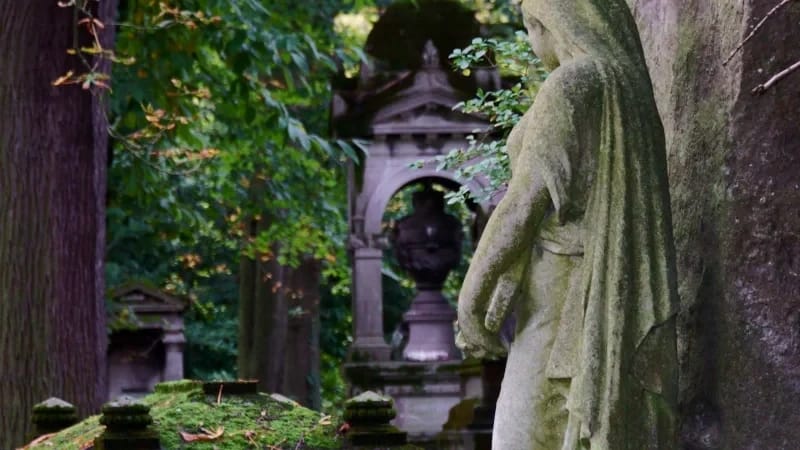
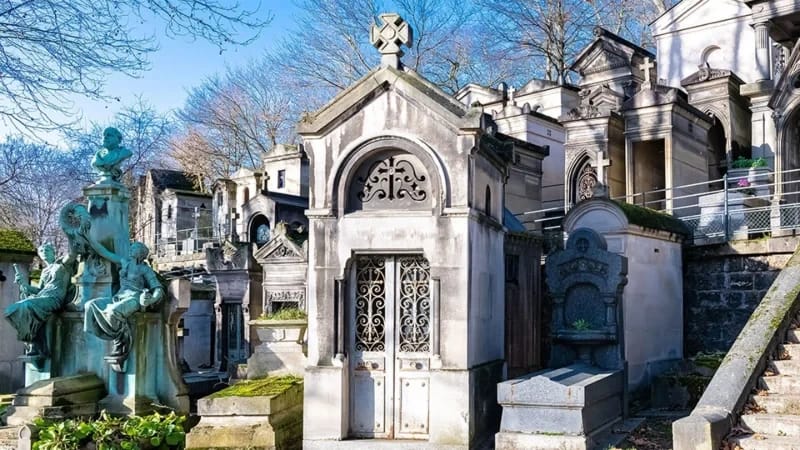
Père Lachaise, the pantheon of global icons
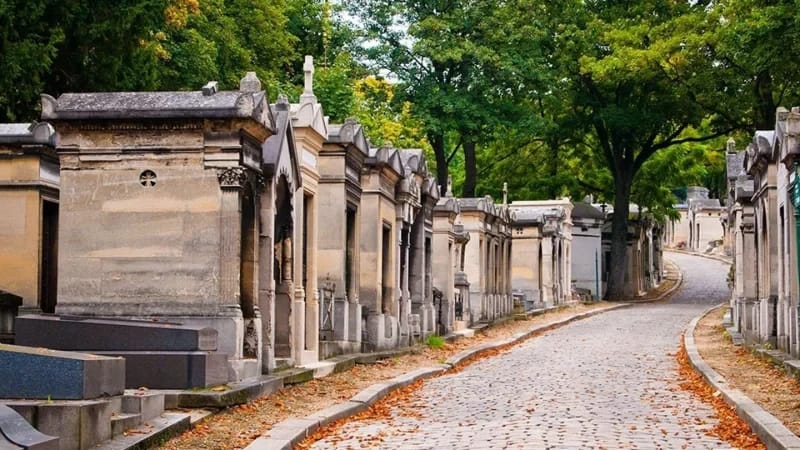
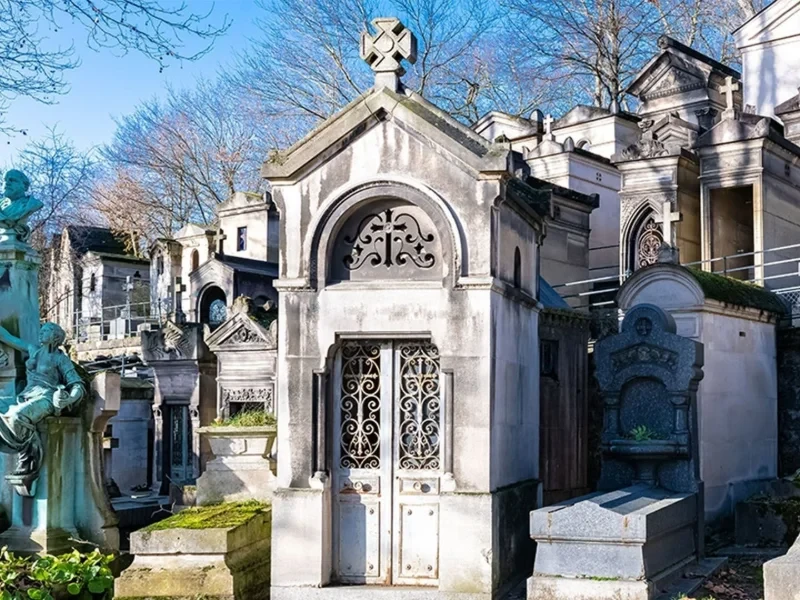
There is a place in the east of Paris where death has never managed to erase glory. Père Lachaise cemetery is not just the most visited in the world, it is also the most star-studded. Poets, singers, philosophers, painters, actors, and revolutionaries rest side by side, forming a universal pantheon that attracts over three million cultural pilgrims each year from Japan, South America, and the United States.
This exceptional concentration of celebrity graves is explained by the history of the place. Opened in 1804, the cemetery initially struggled to attract Parisians who found it too out of the way. The city then had a brilliant idea: to transfer the remains of Molière and Jean de La Fontaine there in 1817. The marketing operation was a triumph. Within a few years, the great bourgeois families were competing for plots, artists wanted to be buried there, and Père Lachaise became the "VIP section" of French eternity.
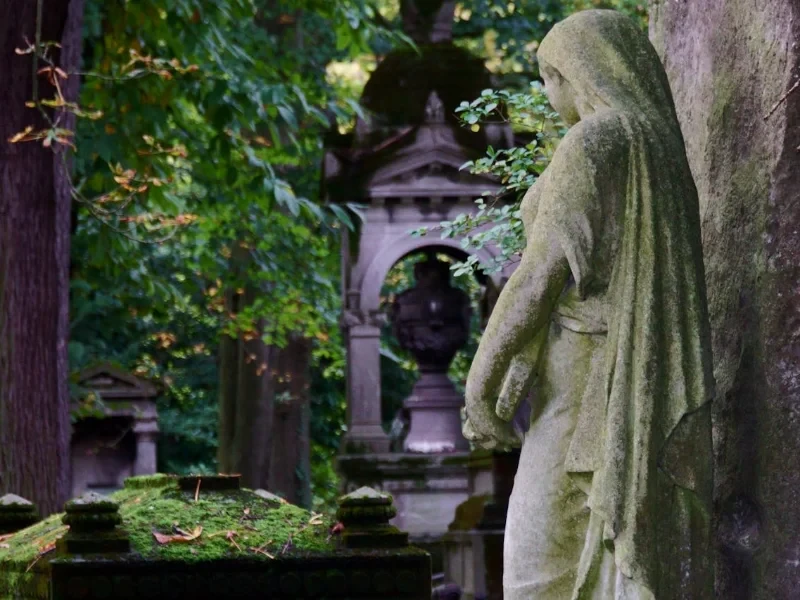
Today, the list of personalities buried there is dizzying. You will come across Frédéric Chopin, whose heart remains in Warsaw but whose body rests here under a weeping muse. You will discover Marcel Proust, Sarah Bernhardt, Yves Montand, Simone Signoret, Colette, Georges Méliès, Guillaume Apollinaire, Georges Bizet, Amedeo Modigliani, Isadora Duncan, Marie Trintignant, and many other figures. Each path is a lesson in cultural history, each turn a thrill.
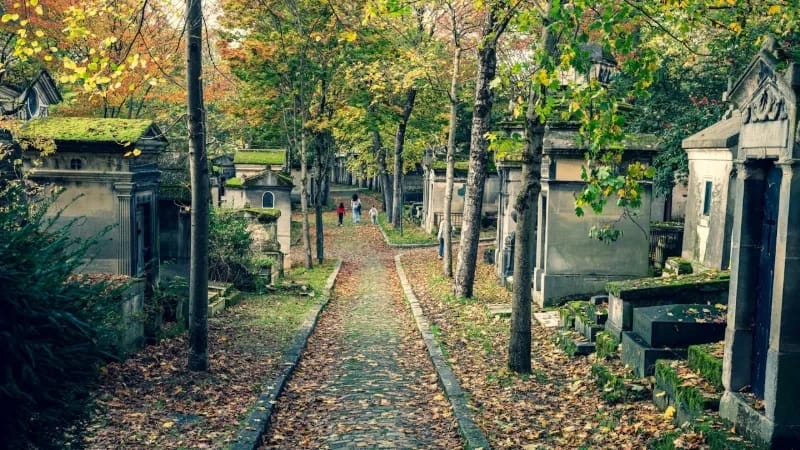
For an unaware visitor, this abundance can be overwhelming. Without a map, without landmarks, you can wander aimlessly through the 44 hectares of the cemetery, missing the essentials. That's why a visit designed as a truly structured tour makes perfect sense.
Jim Morrison, Édith Piaf, Oscar Wilde: the graves that captivate visitors
Three names alone concentrate the majority of pilgrimages: Jim Morrison, Édith Piaf, and Oscar Wilde. Their graves form what guides humorously call the "sacred triangle of Père Lachaise". They crystallize both collective memory, the cult of icons, and the international fascination with Paris.
Start at the 6th division, where Jim Morrison, the Doors' enigmatic poet, rests, having died at just 27 in a Paris apartment in 1971. His grave is surprisingly modest: a simple headstone and a bust long since stolen under mysterious circumstances never resolved. Yet, the atmosphere is electric. Visitors of all generations come to leave cigarettes, messages, poems. The security barrier, installed to protect the grave, has itself become a wall of multicolored dedications. Nearby, trees are covered with chewing gum stuck by fans as a sign of homage – a controversial but enduring ritual.
Next, head to the 97th division, where La Môme Piaf rests. Her family tomb, in black marble, is remarkably simple. She rests alongside her father and her daughter Marcelle, who died at the age of two. A simple cross, a discreet inscription, and almost always, fresh flowers. The place is moving in its intimacy, a far cry from the boisterous legend of the artist on stage.
Finally, do not leave without visiting the 89th division to meet Oscar Wilde. The Irish dandy has rested there since 1900 under a monumental winged sphinx sculpted by Jacob Epstein. Long covered in lipstick marks left by admirers, the monument is now protected by a glass screen. The ritual of kissing continues on the glass, in a touching display that spans generations.
An optimized tour to ensure you don't miss the legendary graves
Here's the paradox of Père Lachaise: the more you want to see, the more time you risk wasting. The official map distributed at the main entrance, Boulevard de Ménilmontant, is useful but incomplete. Many famous graves are not listed, and the scale makes it difficult to read in the sloping alleys. Without a strategy, a visitor can easily spend an hour searching for a single grave, under a blazing sun or pouring rain.
A well-structured tour changes everything. Ideally, enter through the main gate (Place Auguste-Métivier), climb towards the crematorium, descend through the eastern alleys to reach Morrison, then head up to the central chapel for Chopin, before heading south for Wilde and Piaf. In two hours flat, you can see around twenty legendary graves and understand the historical layout of the site.
But the real luxury is knowing where to look. An experienced guide will point out the hidden fresco above a doorway, the sculpted detail on a capital, the Greek inscription hidden on a stone. They will tell you why Molière was buried here despite the Church refusing him a Christian burial, or how Sarah Bernhardt chose her spot while alive, to overlook the view from the hill.
Another major advantage is time management. Père Lachaise closes relatively early, and some divisions close their cross alleys by late afternoon. Without terrain expertise, you risk having to turn back or end your visit in a hurry. This is why more and more travelers prefer a thematic guided tour over a simple solitary stroll.
Book a guided tour for an exceptional experience
Experiencing Père Lachaise with a local lecturer offers your Parisian day an unparalleled depth. Our Visite guidée du Père-Lachaise offers exactly that: two hours of immersion led by a passionate guide, a historian and expert on the personalities resting in these alleys. You won't follow a recited speech, but a genuine living conversation, punctuated by rare anecdotes, period testimonies, and workshop secrets.
Our tour has been refined over the years to balance the essentials and hidden gems. You will pay respects to Morrison, Piaf, and Wilde of course, but your guide will also lead you to Balzac, whose bust was sculpted by Rodin, to Modigliani and his companion Jeanne Hébuterne buried side by side after a heartbreaking tragedy, to the moving sculpture of Héloïse and Abélard who have slept embraced for 900 years, or to Delacroix, Chopin, and Bizet.
The price of our offer is accessible from 14,50 €, an excellent value for money considering the cultural richness shared over these two hours. Our groups are intentionally small to preserve the quality of listening and allow everyone to ask questions freely. The tour takes place regardless of weather conditions: Père Lachaise has a particular charm under the mist, and a ray of sunshine through the foliage instantly transforms a banal alley into a postcard.
Booking in advance is strongly recommended, especially in high season (April to October) when slots fill up quickly. Click, choose your date, and let yourself be carried by the experience.