An open-air museum cemetery : a dive into the enigma of Père Lachaise
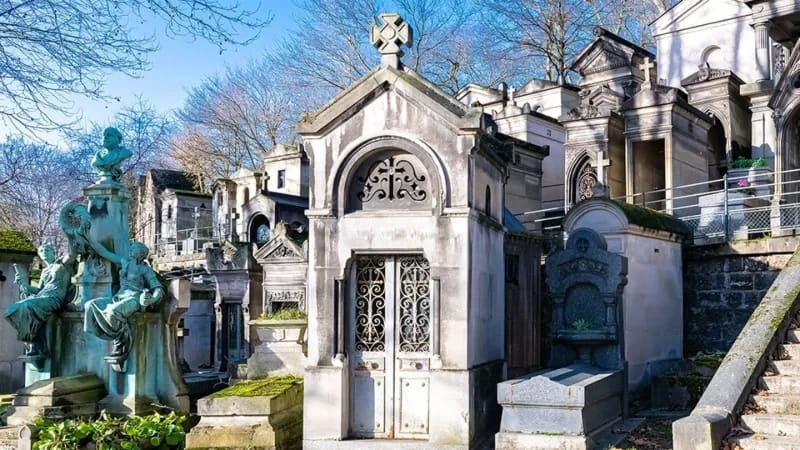
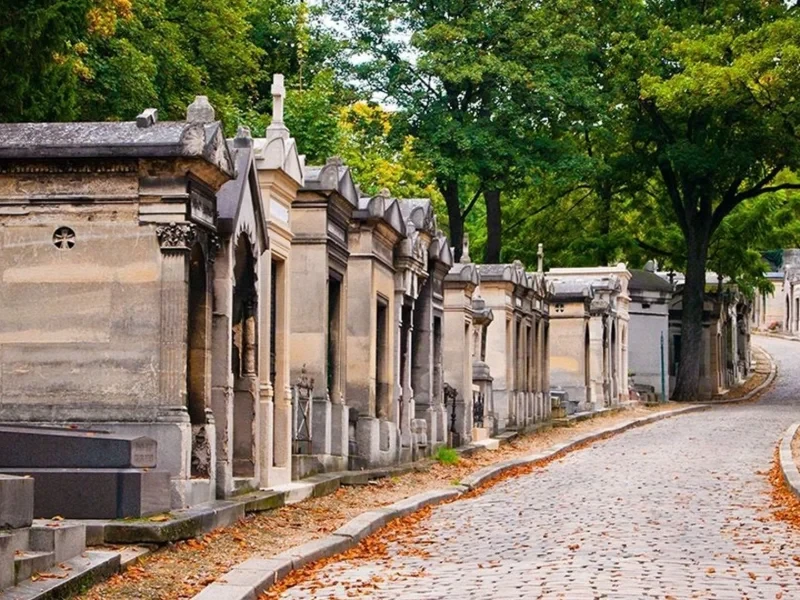
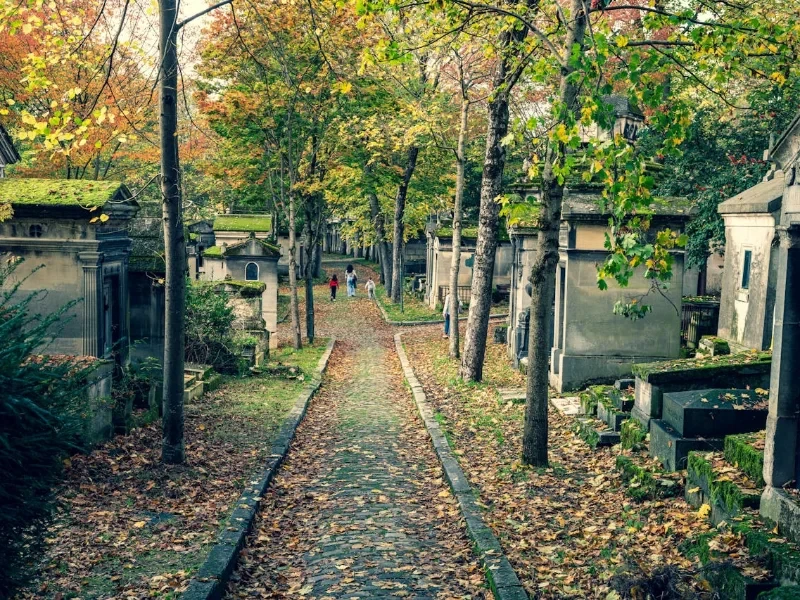
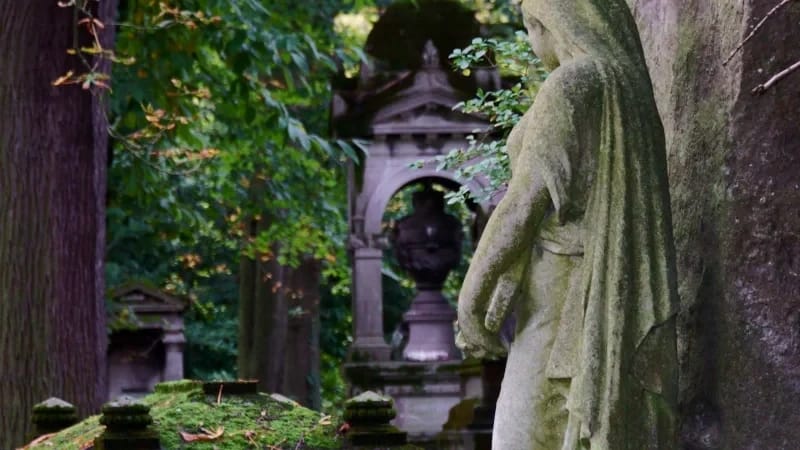
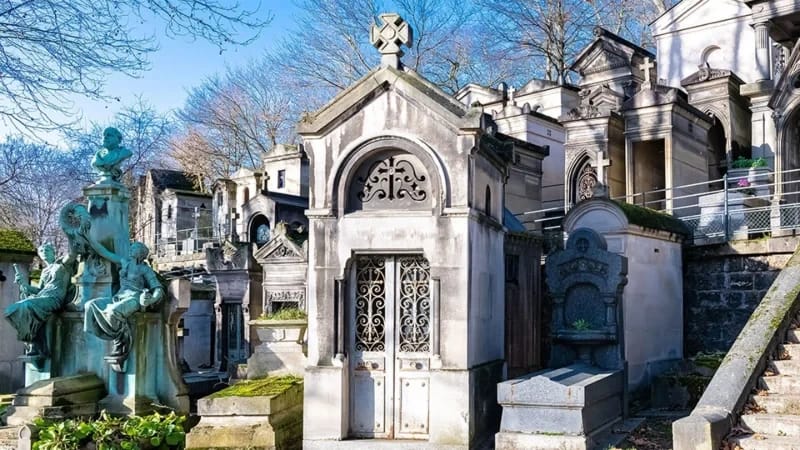
Welcome to the largest green space within the city limits of Paris. Created in 1804 by order of Napoleon, Père Lachaise cemetery spans 44 hectares of wooded hills, cracked chapels, and cobbled paths where ivy reigns supreme. Here, every stone tells a story. Every engraved symbol hides a message. Every abandoned grave whispers the secrets of a vanished family. You are not just in a burial place, but in a true open-air museum where nearly a million souls have rested for over two centuries.
Père Lachaise was initially shunned by Parisians, who found the location too far from the center. It took the dramatic transfer of the remains of Molière and La Fontaine in 1817, followed by the legendary lovers Héloïse and Abélard, for the place to become fashionable. Since then, it attracts over three million visitors each year from around the world, eager to explore this unique funerary art gallery in Europe. The styles clash: flamboyant neo-Gothic, sinuous Art Nouveau, Egyptian obelisks, neo-Byzantine chapels, and romantic statues coexist in an organized chaos that adds to the charm of the walk.
Insiders know: beyond the marked paths, it's the forgotten graves, the mausoleums buried under moss, and the enigmatic inscriptions that make the stroll captivating. A simple wander can turn into a real investigation, provided you know where to look and have the keys to decipher this vast stone library.
The most mysterious and symbolic graves to discover
Some graves at Père Lachaise seem straight out of a fantasy novel. Take the grave of Georges Rodenbach, the Belgian writer of "Bruges-la-Morte". His tomb, sculpted in 1898, depicts him half-emerging from his coffin, a rose extended towards the sky, as if refusing to fully join the afterlife. The effect is striking, almost theatrical, setting the tone for a cemetery where death is staged with flair.
Not far away, you will find the grave of Adolphe Thiers, imposing and pyramidal, dominating its area like a pagan temple. Then come the Masonic graves, recognizable by their squares, compasses, and carved acacias. Père Lachaise is home to hundreds of Freemason graves whose hermetic symbols span the ages: radiant triangles, the Eye of Providence, truncated columns symbolizing a life cut short.
Don't miss the famous grave of Fernand Arbelot, sculpted in 1942 by Adolphe Wansart. The musician rests eternally holding the face of his wife, a heartbreaking and disconcerting image of love. Further along, the tomb of Victor Noir, a journalist murdered by a cousin of Napoleon III, attracts women from all over the world: his bronze statue, lying on the ground, features a very visible anatomical feature that popular tradition says is fertility bringing. The result is astonishing: the golden area betrays the caresses of thousands of visitors over the decades.
Each path thus holds its share of surprises: intertwined hearts, winged hourglasses, guardian owls, ouroboros snakes. Without a key to interpretation, these iconographic treasures go completely unnoticed, blending into the scenery like mere decorative ornaments.
Urban legends and secret rituals of Père Lachaise
Père Lachaise is not just a cemetery: it's a book of superstitions open to the four winds. The most famous concerns the grave of Allan Kardec, founder of spiritualism in the 19th century. His stone is said to "recharge the energies" of anyone who places their hand on his bust. Flowers are placed there daily, and it's not uncommon to see visitors murmuring secret requests, eyes closed, palm pressed to the granite. The fervor is such that it is visible: the bronze of the bust shines from wear where hands have been placed for over 150 years.
Another delightful legend is that of Jim Morrison. The Doors singer has rested here since 1971, and his grave was once a frenzied pilgrimage site. Graffiti, candles, joints left as offerings, embraces on the tombstone… The city eventually installed a metal barrier to protect the site, but the mystical aura remains. It is said that Morrison himself chose Père Lachaise while visiting Paris a few months before his death, as if he foresaw his imminent end.
Some guides also mention "weeping graves", those monuments from which mysterious traces of moisture seem to escape even in dry weather. Scientific explanation or unexplained phenomenon? Opinions differ. There are also whispers of a network of secret catacombs connecting the cemetery to old quarries, though no official evidence has ever confirmed it.
Finally, don't leave without passing by the Wall of the Federates, the last bastion of the Paris Commune in 1871. It was here that 147 communards were shot and buried in a mass grave. The place still vibrates with palpable emotion, between political history and popular tribute, and remains a rallying point for militant memories.
Why explore these secrets with a passionate guide?
Faced with such a historical and symbolic maze, wandering Père Lachaise alone is like visiting the Louvre without a map: you'll see beautiful things, but miss the essence. That's precisely why our Visite guidée du Père-Lachaise was designed by a passionate lecturer, an art historian and expert in Masonic symbols and juicy anecdotes that have made the place legendary.
For two hours, your guide takes you off the beaten path. He teaches you to decipher a stele, to recognize an Egyptian obelisk from a Masonic pyramid, to understand why a romantic sculptor chose one allegory over another. He tells you about forgotten scandals, forbidden loves, deadly duels, and sensational trials that shaped 19th-century Paris. You no longer look at a grave: you meet a person, an era, a mystery.
What do our visitors appreciate most? The human pace of the tour, in a small group, which allows for questions, respectful silences, and that rare feeling of being introduced to the backstage of an iconic place. Our walk is available from 14,50 €, a modest investment considering the dozens of anecdotes you'll bring back from this experience. We favor late afternoon slots, when the low light wraps the monuments in a cinematic atmosphere and the passing tourists have left the paths.
Book your spot now: groups are intentionally limited to preserve the quality of the experience and allow you to fully immerse yourself in romantic and mysterious Paris.