Space Invader, the masked artist who colonized Paris
Behind the enigmatic pseudonym of Space Invader is Franck Slama, a French artist born in 1969, trained at the Beaux-Arts, and known for maintaining an almost religious anonymity since the start of his career. He wears a mask during his rare public appearances, refuses to be photographed without it, and only gives interviews on the condition that his visual identity is preserved. This mystery is an integral part of his artistic myth. Since 1998, he has methodically placed his small pixelated creatures inspired by the 1978 arcade game Space Invaders on the streets of Paris and around the world.
His project, called "Invasion," follows an almost military logic. Each invaded city is numbered, and each work is cataloged, referenced, and precisely mapped. Paris serves as the original laboratory: it all began here, and here the density of invaders is the highest in the world. Today, there are over 1500 mosaics in the capital, making it the most "invaded" city globally. The 13th arrondissement, particularly Butte-aux-Cailles, is among the densest areas of this peaceful and cheerful invasion.
Invader's work deeply questions our relationship with public space, popular culture, and heritage. By grafting creatures from an 80s video game onto the ancient walls of Paris, he creates a poetic bridge between two worlds that seem opposed: the age-old Haussmann stone and the digital pixel of the arcade generation. This aesthetic collision is now the subject of exhibitions in prestigious museums, from the Palais de Tokyo to the Musée en Herbe, without the artist ceasing his nocturnal work in the streets, faithful to his clandestine origins.
The tile technique: the secret to the Invaders' longevity
Where most street artists use spray paint, stencils, or collages, Space Invader has made a radically different choice: glazed tile mosaics. This technical choice changes everything and explains why his works endure for decades, where more fragile creations fade in a few months. Each invader is assembled in the studio from cut ceramic tiles and glued onto a flexible grid. The artist then proceeds with the nocturnal installation using a special adhesive mortar on carefully scouted facades during long daytime wanderings.
This technique gives the works exceptional resistance. Unlike paint, ceramic fears neither driving rain, UV rays, nor covering tags. It withstands high-pressure cleanings by municipal services, covering graffiti, and the wear of time. Most invaders placed in the early 2000s are still perfectly legible today, with their bright colors intact, as if frozen in a pixelated eternity defying all urban aging laws.
Each mosaic has a unique identification code, like PA_XXXX for Paris. The artist also assigns each piece a number of points, as in the original video game, based on its size, complexity, and location. An official mobile app, called Flash Invaders, allows fans to photograph the works to register them and accumulate points, turning the entire city into a giant life-sized game board. This playful and participatory dimension is an integral part of the artistic project and has created a global community of passionate "flashers" who tirelessly roam the streets in search of new pieces to discover.
Butte-aux-Cailles, the artist's preferred playground
While Paris has over 1500 invaders, Butte-aux-Cailles stands out with a particularly remarkable concentration of mosaics in a small area. The artist seems to have fallen in love with this atypical village in the 13th arrondissement, whose low architecture, cobbled streets, and picturesque nooks offer ideal canvases for his creations. Every corner of a wall, every chimney, every parapet becomes a potential canvas for the next nocturnal invasion.
Always look up during your walk: that's where most invaders hide. The artist favors heights, both to avoid vandalism and to create a surprise effect for the attentive passerby. An invader often reveals itself at the last moment when you look up at an intersection or step back slightly from a wall to gain perspective. Rue de la Butte-aux-Cailles, Place Paul Verlaine, Rue des Cinq Diamants, Passage Boiton, and Rue Barrault are priority areas to explore. Some invaders have been visible there for over twenty years, testifying both to the technique's solidity and the goodwill of locals attached to their artistic heritage.
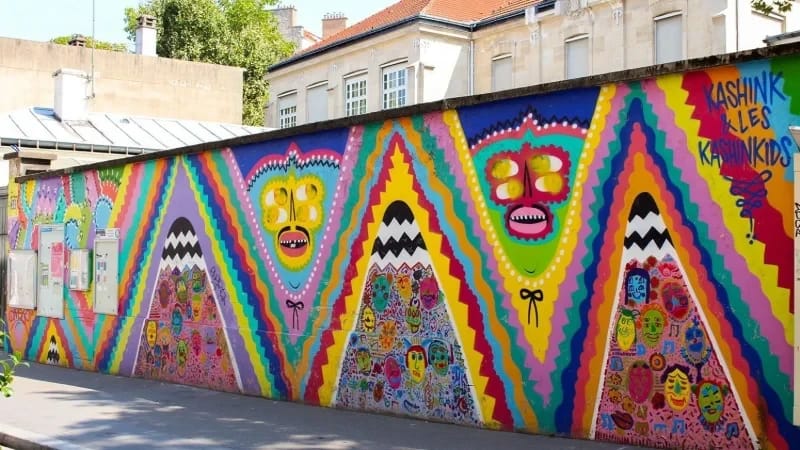
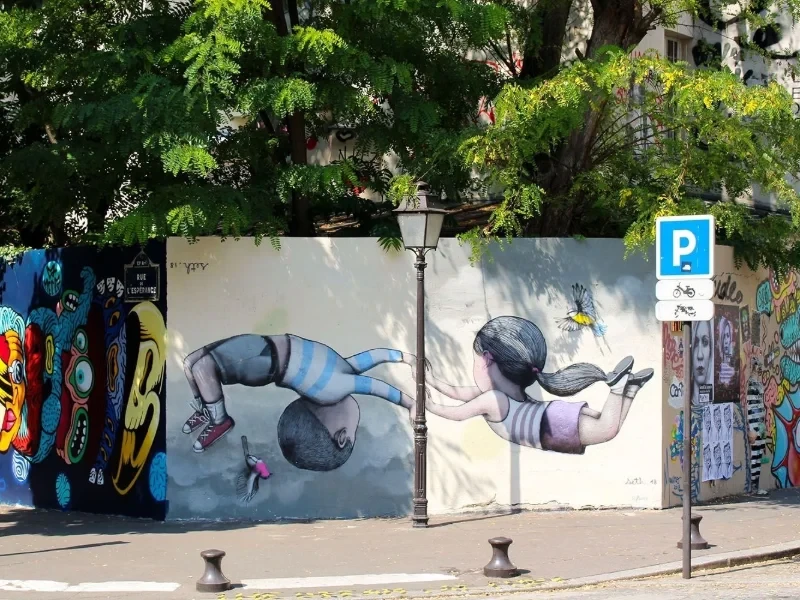
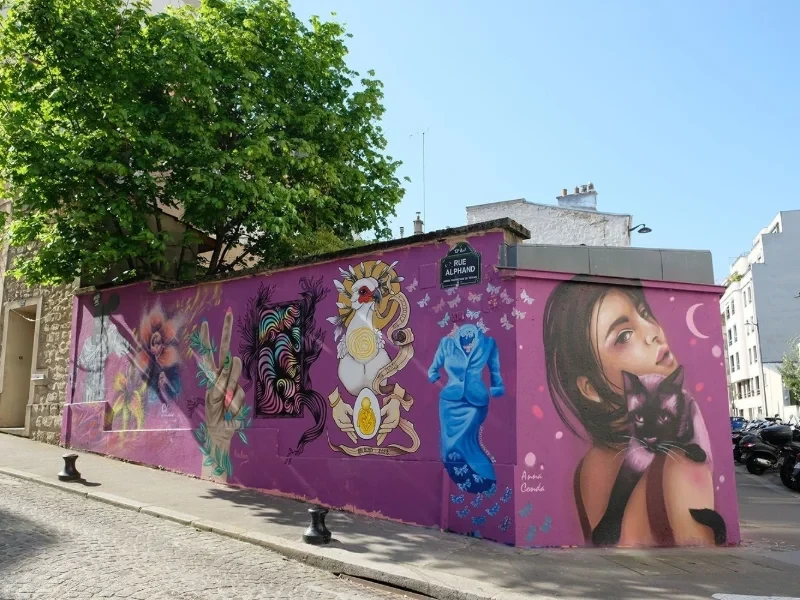
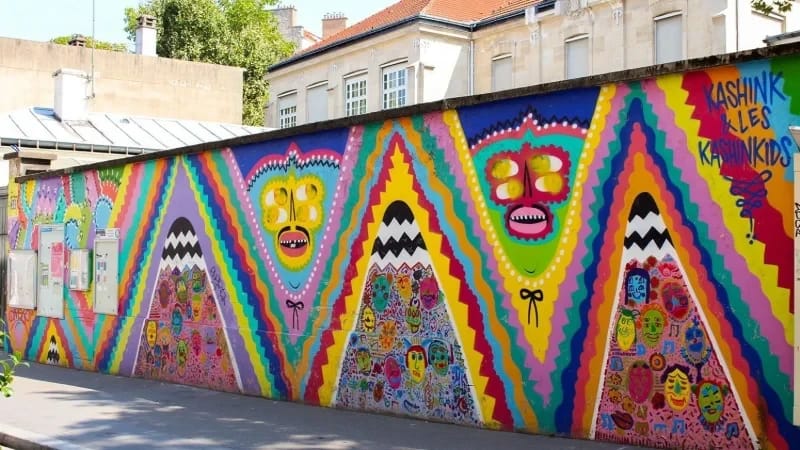
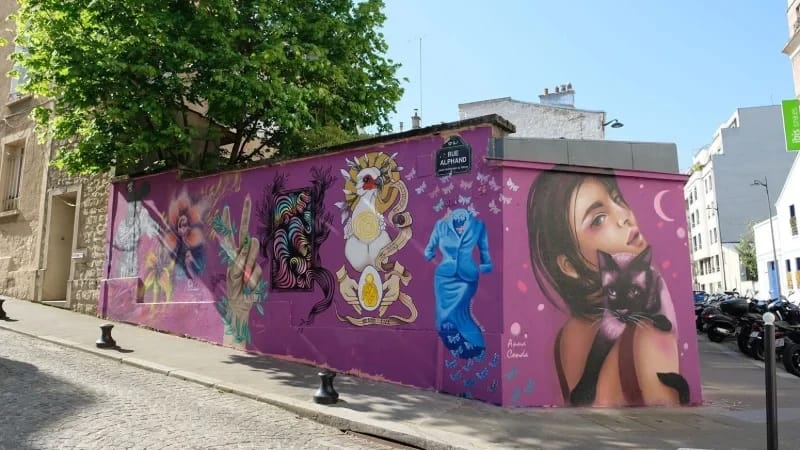
The neighborhood's uniqueness adds a fascinating aesthetic dimension to the hunt. The invaders interact with other mural works: stencils by Miss Tic, silhouettes by Jef Aérosol, monumental frescoes by international collectives... This artistic mille-feuille creates a true open-air gallery where each work converses with its neighbor. The density and diversity make Butte-aux-Cailles one of the rare places in the world where you can experience a complete panorama of contemporary international street art in just a few hours. A rare privilege for enthusiasts who know where to look.
Discover hidden mosaics with a guide
Finding a few invaders by chance during a stroll is already satisfying, but embarking on a methodical hunt with an expert radically transforms the experience. A guide knows the precise locations of the works, including the most discreet ones, those perched five meters high or hidden in secret passages often overlooked by solitary walkers. At Butte-aux-Cailles, the Paris Street Art à la Butte-aux-Cailles, available at the affordable rate of 14,50 €, guarantees you will discover a maximum number of mosaics in optimized time, with a complete 1.5-hour immersion starting from Corvisart metro.
Beyond the inventory, the guide places each work in its context: approximate installation date, identification code, number of points assigned, anecdotes about the installation, works that have disappeared or been moved during renovations. They also explain how the Flash Invaders app works, the codes of the global community, the friendly rivalries between hunters, and the technical subtleties that distinguish the artist's different series. These details, invisible to the untrained eye, give unexpected depth to each mosaic encountered along the route.
The walk is also an opportunity to discuss the fascinating question of the legal and heritage status of street art. Should these uncommissioned works be preserved, restored, or allowed to disappear? How do the Paris city hall and locals react to this form of clandestine expression? These are all topics that fuel stimulating conversation throughout the tour. Far from a simple photo safari, this visit becomes a true initiation into a contemporary urban culture that is both playful, aesthetic, and intellectual. You leave the tour with a fresh perspective on the city and an irresistible desire to continue the invader hunt during your next Parisian wanderings.