Miss Tic, the pioneer of Parisian feminist stencil art
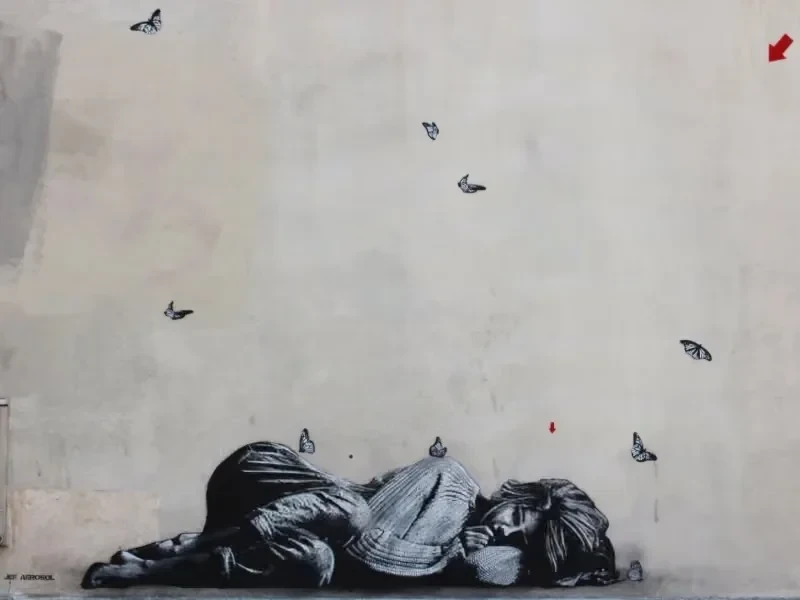
Born Radhia Novat in 1956 in the 14th arrondissement of Paris, the woman who would become Miss Tic experienced a youth marked by grief and Californian exile before returning to the capital in the early 1980s. This Parisian of Tunisian and Norman origin then found her preferred studio in the streets, transforming the city's walls into pages of a personal journal with the air of a manifesto. It was in 1985 that she created her first stencils in the Ménilmontant district, at a time when street art was not yet recognized as a discipline. She would become one of its French tutelary figures, alongside Blek le Rat and Jef Aérosol.
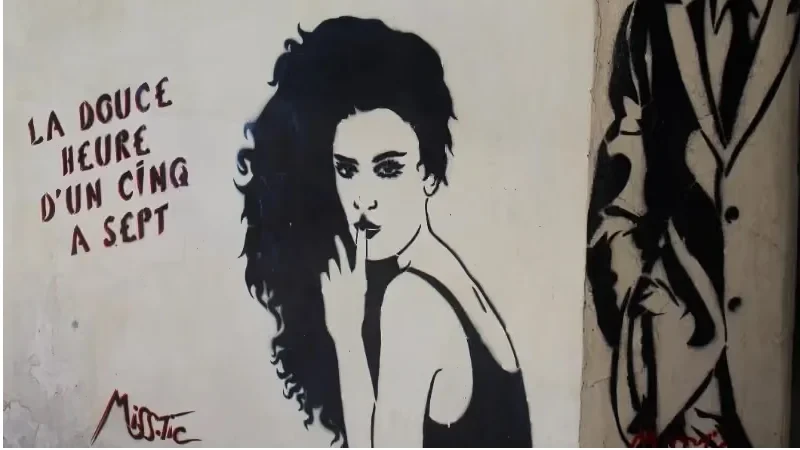
What immediately distinguishes Miss Tic is the bold marriage between the image of a brunette woman, often perceived as a fantasized self-portrait, and meticulously crafted poetic texts. At a time when the public space was almost exclusively male-dominated, she dared to impose a feminine, sensual, ironic, and political voice. Her work, long considered vandalism and repeatedly sanctioned in court, gradually gained recognition. Her works are now found in prestigious private collections, on stamps issued by La Poste, and in the largest French museums.
Her passing in May 2022 plunged the street art world into mourning, but her legacy remains vibrant in the alleys of Butte-aux-Cailles. Walking through this neighborhood today is like strolling through the open-air museum she patiently built over four decades of clandestine creation later celebrated by her peers and the public.
Decoding the visual poetry of Miss Tic's stencils
Recognizing a Miss Tic stencil does not require art history expertise: her graphic signature is immediately apparent. A slender female silhouette, often in a red dress or fatal attire, with brown hair, in a pose that oscillates between a tango dancer and a film noir heroine. Beside or below, always a punchline. This is where the artist's genius lies, in the intimate alliance of image and word, beauty and gentle subversion.
Her texts function as urban haikus, blending wordplay, disguised alexandrine, and feminist aphorism. “Desire attracts as well as repels,” “Chic, shock, cheque,” “I oscillate between being and nothingness,” “Art is a crime that escapes market laws”... Each phrase deserves a pause, a reread, a moment of reflection. Miss Tic wrote to be read standing, in the street, between errands. She rejected museum contemplation in favor of the chance encounter, the emotion stolen from the daily walk.
This visual poetry also plays on location. Miss Tic chose each wall with the care of a craftsman: old building doors, crumbling facades, narrow street corners. The architectural context engages in dialogue with the work and gives it its true depth. In Butte-aux-Cailles, this approach makes perfect sense, as the neighborhood itself resembles an urban theater set, with its low houses, cobbled passages, and flowered gardens. Learning to read Miss Tic is learning to read Paris differently, understanding that every street corner can hold a declaration of love, a political jab, or a feminist manifesto disguised as a playful wink.
Where to find Miss Tic's works at Butte-aux-Cailles
Butte-aux-Cailles boasts one of the highest densities of Miss Tic's works in Paris. The artist established her quarters in this unique village of the 13th arrondissement in the late 1990s, drawn by the rebellious and bohemian spirit of the place and the kindness of the locals. Today, a methodical walk through its alleys still allows you to encounter several of her creations, despite the inevitable coverings due to time, weather, and municipal maintenance.
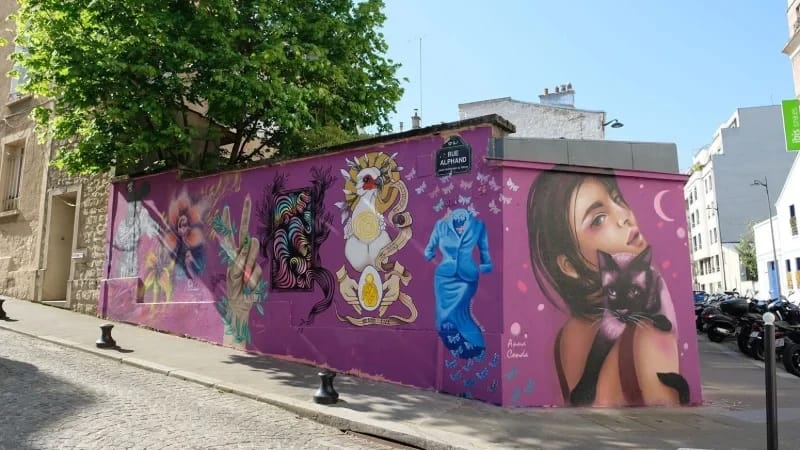
Rue de la Butte-aux-Cailles remains the main artery to explore patiently. Look up beyond the shop windows: several of her iconic female figures were recently visible there, notably on the lintels of coach doors. Continue to Rue des Cinq Diamants, where the artist long maintained a silent dialogue with the neighborhood's bars and independent bookstores. Rue Michal, Rue Barrault, Passage Boiton, and Rue Alphand are also essential landmarks for seasoned stencil hunters.
However, beware: street art is, by definition, ephemeral. Some major pieces have disappeared over time or have been covered by other artists, while a few kind owners have taken care to seal the stencils on their facades to preserve them from the ravages of time. This fragility is precisely what makes the discovery valuable: each work still visible is a small victory against wear. A tip to maximize your chances: favor old coach doors, shaded corners, and walls less exposed to driving rain. It's often there that Miss Tic loved to hide her female silhouettes, like so many poetic sentinels watching over the neighborhood.
Strolling through the alleys of the 13th following the stencil artists
Exploring Miss Tic's traces alone is a rewarding experience, but going with a guide radically changes the depth of the discovery. An expert accompaniment not only helps identify the works still visible but also understand the codes, references, and historical context that give these stencils their full meaning. At Butte-aux-Cailles, the Paris Street Art à la Butte-aux-Cailles, offered at the affordable price of 14,50 €, opens the doors to a little-known artistic heritage through a walking tour of about 1.5 hours designed to reveal the hidden gems of the neighborhood.
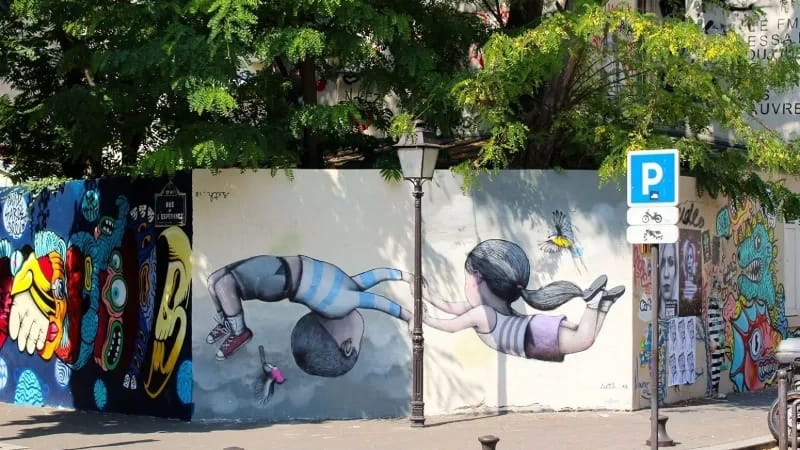
The route, starting from Corvisart metro, winds through the most iconic cobbled alleys of the Parisian village. You will obviously encounter several works or traces of Miss Tic, but also the creations of her famous contemporaries: the pixelated mosaics of Space Invader, the contemplative silhouettes of Jef Aérosol, the monumental frescoes of Seth Globepainter, and many other international artists who have made this neighborhood a leading scene. The guide shares field anecdotes, iconographic decodings, and delightful little stories about the sometimes friendly, sometimes tense relationships between the neighborhood's artists.
This guided tour is aimed at both enlightened amateurs and curious individuals who wish to discover Paris differently. Far from the classic tourist circuits, Butte-aux-Cailles offers a dive into a popular, artistic, and vibrant Paris. By paying tribute to Miss Tic while exploring the other wall writings of the neighborhood, you contribute in your own way to the preservation of a fragile cultural memory, that of a generation of artists who rethought the relationship between the city and art. An experience that is both moving, aesthetic, and intellectual, to be enjoyed without moderation.