The solo walk : total freedom but invisible traps
Exploring Butte-aux-Cailles alone, with a paper guide or a smartphone connected to a mapping app, has undeniable advantages. You move at your own pace, stop whenever you want, and freely choose your coffee breaks and photo detours. This freedom particularly appeals to independent travelers who prefer to tailor their experience rather than follow a predefined route. The financial cost is almost nil, limited to transport and any consumptions in local cafés.
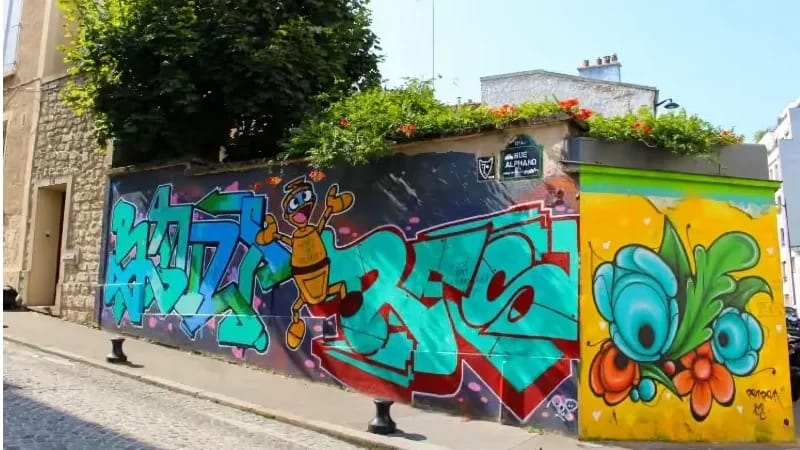
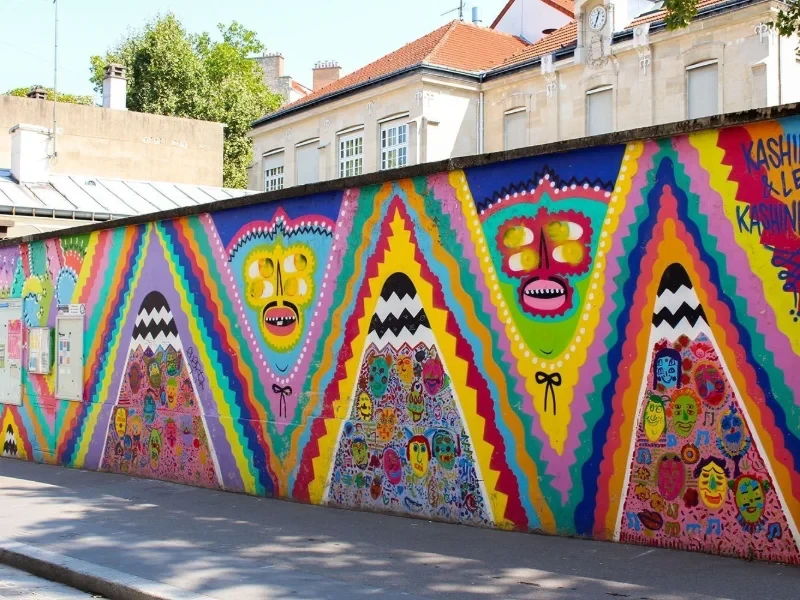
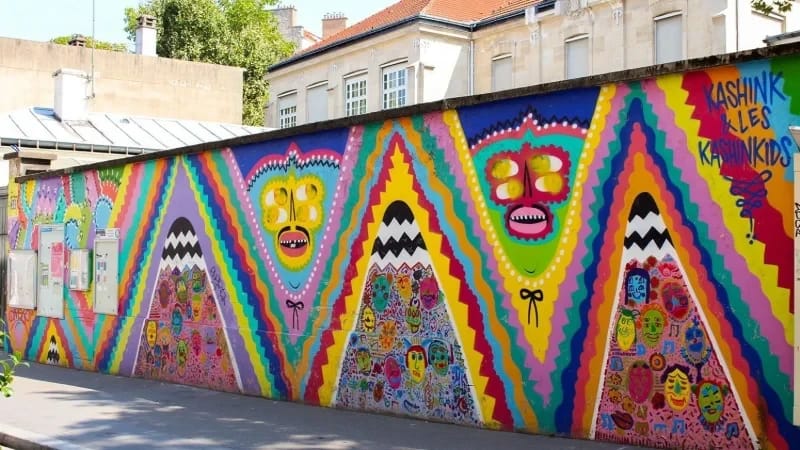
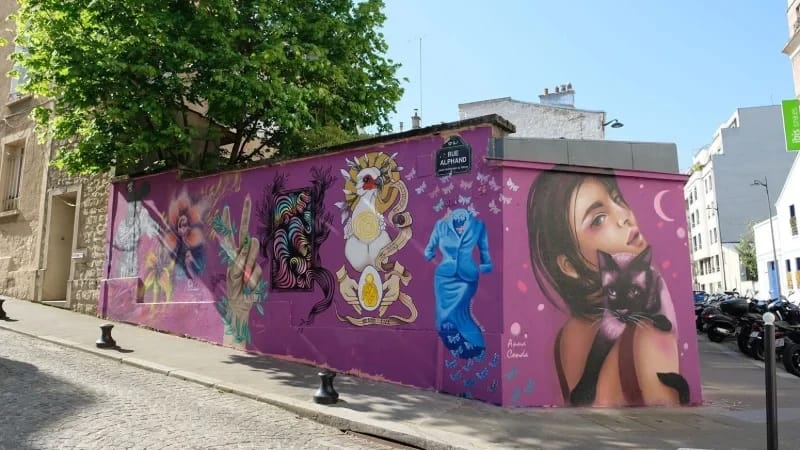
This apparent autonomy hides several traps that visitors often discover too late. The first concerns the location of the artworks. Monumental murals are obviously easy to find, but hidden gems, discreet stencils, and mosaics perched five meters high completely escape the untrained eye. Mapping apps available on smartphones suffer from a structural flaw: they are never perfectly up to date, as street art is constantly evolving. Many referenced works have disappeared, while recent creations are not yet integrated into public databases.
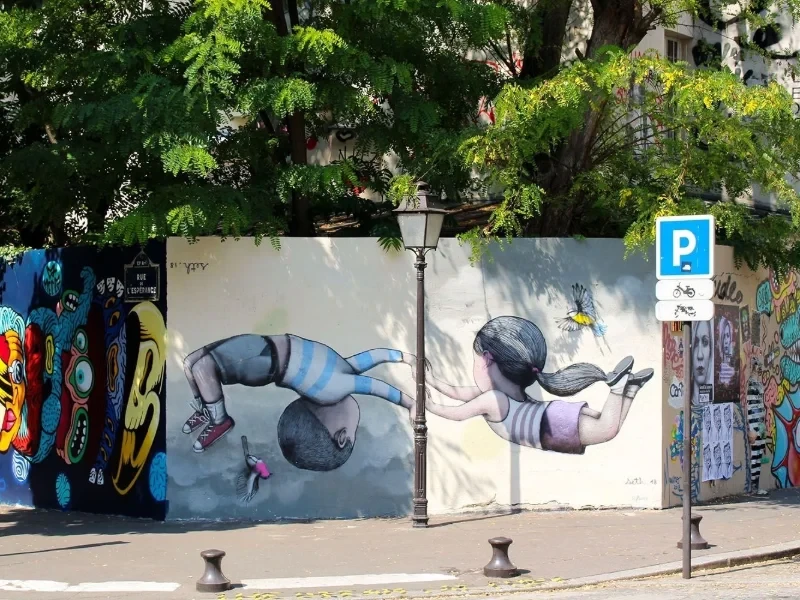
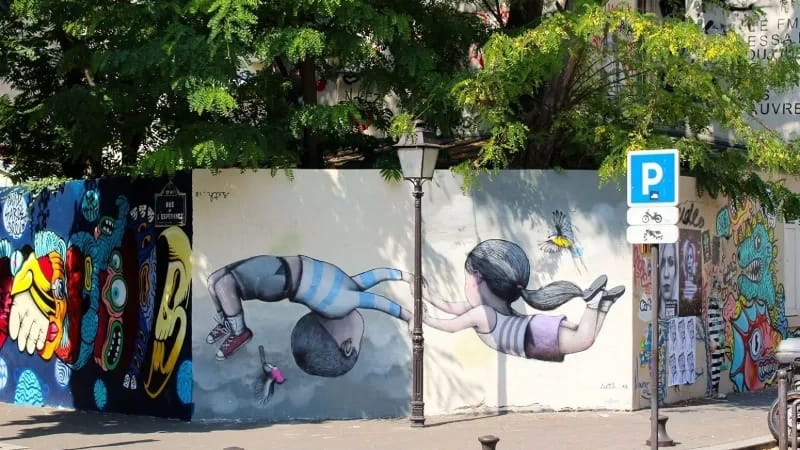
The second trap concerns understanding. Seeing an artwork is not enough to read it. Without context, a Seth Globepainter mural looks like a pretty image but without particular depth. A Miss Tic stencil becomes a nice drawing and a mysterious phrase. A Space Invader mosaic is just a funny pixelated creature. The true artistic intent, cultural references, implicit dialogues between artists, and political or sociological issues remain invisible to the uninitiated walker. This intellectual dimension is the essence of the richness of contemporary street art, much more than its simple surface aesthetic.
What only a tour guide can really bring you
A professional street art tour guide in Paris is not just a companion: they are a cultural decoder who opens access to an invisible heritage for the untrained eye. Their first added value lies in their intimate knowledge of the area, constantly updated by their regular visits to the neighborhood. They know exactly which works are still visible today, which recent creations appeared last week, and which major pieces have unfortunately disappeared over time. This living expertise cannot be replaced by any app or paper guide.
The second added value is iconographic and cultural decoding. A guide explains why Miss Tic chose a specific location, which Baudelaire phrase she implicitly cited, and what friendly rivalry she had with another artist. They tell you the story of the night Space Invader almost got arrested while placing a particular mosaic, the urban legend surrounding a giant mural, and the history of a commission discreetly funded by a local street art enthusiast. These stories radically transform your experience and create lasting memories, far more enduring than the simple silent contemplation of a work.
The third added value concerns the networking of works and artists. An experienced guide makes you understand how creations interact with each other, how some murals respond to others, and how the neighborhood functions as a coherent artistic ecosystem rather than a simple juxtaposition of isolated works. This systemic dimension is absolutely impossible to grasp solo, as it relies on a deep historical knowledge of personal relationships, collaborations, and rivalries between artists that have shaped the neighborhood for forty years. This is where the difference lies between seeing works and truly understanding street art as a living culture.
The invisible and the ephemeral : street art requires expertise
Two structural characteristics of street art make expert guidance particularly valuable, almost indispensable for getting the most out of a visit. The first is the radical ephemerality of these works. Unlike paintings displayed at the Louvre, protected by glass and preserved in ideal climatic conditions, street creations live, wear, are covered, and disappear. A major work can be destroyed by a renovation decided without consultation, covered by an ambitious young artist, or simply erased by rain and time.
This ephemerality makes any fixed mapping obsolete. A paper guide bought two years ago probably references works that no longer exist, while ignoring recent creations that have appeared since. A local tour guide, who walks the neighborhood several times a week, on the other hand, has real-time updated knowledge. They know exactly what awaits you today, no more and no less, and adapt their route accordingly to ensure you have the best possible experience without unpleasant surprises or useless detours to now-empty walls.
The second characteristic is the strategic invisibility of many works. Space Invader deliberately places his mosaics high up to avoid vandalism. Miss Tic hid her stencils in shaded corners, on discreet doorways. Jef Aérosol sometimes places his portraits in confidential passages that a lone tourist has no reason to take. Without a guide who knows each location precisely, you will inevitably miss a large part of the artistic heritage of the neighborhood, thinking you have discovered it when you have only seen the immediate surface. This is one of the fascinating paradoxes of street art: this so-called popular and accessible art actually requires a real initiation to be fully appreciated.
Book your e-ticket for an immersive cultural experience
Given these challenges, choosing expert guidance is a natural choice for any visitor who truly wants to understand and enjoy Parisian street art. The Paris Street Art à la Butte-aux-Cailles, offered at a very affordable price of 14,50 €, embodies this added value perfectly. This 1.5-hour walking tour starting from Corvisart metro station guarantees a complete immersion in the neighborhood, with a professional tour guide who has made this artistic village their specialized expertise for years.
Online booking is simple, quick, and secure. You receive your e-ticket immediately by email, with all the practical information: specific meeting point, guide contact, clothing recommendations, adaptations in case of bad weather. Groups are kept intentionally small, ensuring a real exchange with the guide, the opportunity to ask all your questions, and a comfortable pace for all participants. This qualitative approach makes all the difference compared to large anonymous tourist tours where you follow a flag without ever really interacting with the guide.
Beyond the artistic discovery itself, this experience is also an excellent gift idea for a birthday, a family event, or a special occasion. It is perfect for couples, groups of friends, families with children from five or six years old, and international travelers who want to discover an unexpected side of Paris. After this tour, you will never look at a painted wall the same way again, in Paris or elsewhere. You will have acquired a new perspective, an enriched visual culture, and most importantly, a valuable key to understanding all your future urban wanderings in the world's major cities. A modest cultural investment for lasting enrichment.