The Bièvre, the forgotten river that shaped the neighborhood
Before becoming this artistic village perched on its hill, Butte-aux-Cailles owes its very existence to a now vanished river: the Bièvre. This small watercourse, a tributary of the Seine, originated in the Guyancourt region and meandered through southern Paris before joining the river near the Austerlitz station. Since the Middle Ages, its waters have attracted fluid-hungry craft activities, notably tanneries, leather works, and especially dye factories. In the 17th century, the famous Gobelins manufactory settled on its banks, permanently marking the industrial identity of the area.
The Bièvre valley long resembled a long ribbon of factories and workshops, where thousands of workers from rural exodus labored. The riverbanks, tanned, colored, smelly, resonated with the sound of beaters, the clatter of looms, and the cries of washerwomen. Butte-aux-Cailles, perched just above, offered working families a slightly healthier refuge than the insalubrious valley bottoms. Thus, a true popular village was formed, with its low houses, small gardens, and narrow alleys that still compose the unique identity of the place today.
The river paid a heavy price for this intense industrial activity. Gradually polluted by chemical discharges, the Bièvre was progressively covered from the late 19th century and completely buried in the first third of the 20th century for sanitary reasons. Today it flows invisibly under our feet, channeled in the sewers, but its ghost continues to shape the topography of Butte-aux-Cailles. The winding streets, surprising elevations, and the orientation of the facades all testify to this buried river geography. Walking through the neighborhood today is to walk in the footsteps of a river and the workers who once made its banks come alive.
The Paris Commune of 1871: the rebellious spirit that spans centuries
The spring of 1871 left an indelible mark on Butte-aux-Cailles. During the 72 days of the Paris Commune, this working-class neighborhood was among the most determined strongholds of the insurrection. The inhabitants, mostly from the working classes employed in nearby factories, had everything to gain from a revolution that promised decent housing, free education, equal pay for men and women, and recognition of workers' labor. Barricades were erected in the steep alleys, transforming the natural topography of the neighborhood into a true popular fortress.
Local legend has it that the very first free balloon of the Commune, named "Le Vengeur," rose from Butte-aux-Cailles to carry the mail of Parisian insurgents to the provinces, thus circumventing the Versailles blockade. This episode symbolizes the spirit of inventiveness, resistance, and solidarity that bound the neighborhood's inhabitants together during those revolutionary weeks. During the Bloody Week of May 1871, the Versailles repression fell with particular violence on these popular strongholds, leaving a working-class memory that was deeply traumatized but also indefatigably rebellious.
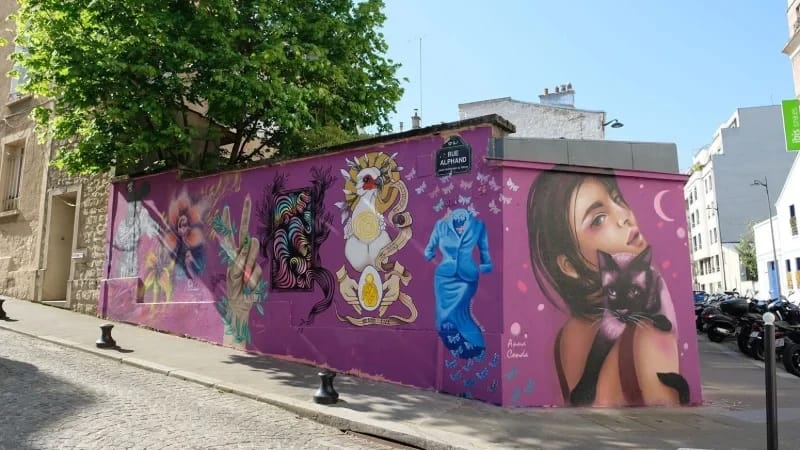
This memory of the Commune has never faded in Butte-aux-Cailles. It continues to irrigate the local culture, through street names, commemorative plaques, militant frescoes, and especially the protest spirit of successive inhabitants. The bars, associations, and cultural venues of the neighborhood often claim this heritage, hosting engaged concerts, political debates, and militant exhibitions. This historical soil explains in large part why street artists found here, from the 1990s onwards, a welcoming, almost complicit environment. Painting a subversive stencil in Butte-aux-Cailles is to extend, in one's own way, the tradition of a popular expression that refuses silence and invisibility.
Counter-cultures and artistic effervescence from the 1990s to today
After World War II, Butte-aux-Cailles long retained its popular identity while gradually attracting a more diverse population: artists, intellectuals, students, activists. The low rent costs, the human scale of the neighborhood, and its bohemian atmosphere favored the emergence of a true Parisian counter-culture, away from tourist circuits and dominant media flows. The 1970s and 1980s saw the flourishing of associative cafés, independent bookstores, screen printing workshops, and alternative expression venues that prepared the ground for the street art explosion of the following decades.
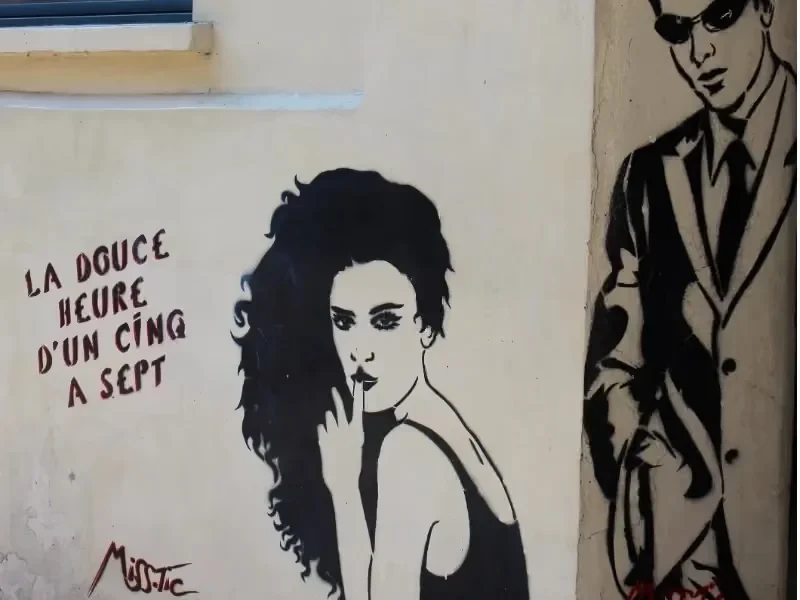
It was in the 1990s that the first street artists massively invested in the walls of the neighborhood. Miss Tic placed her feminist stencils there, Jef Aérosol engraved his nostalgic portraits, Space Invader stuck his first pixelated mosaics. These artists did not choose the neighborhood by chance: they found a welcoming attitude from residents, an architecture suitable for mural interventions, and above all a cultural context that symbolically legitimized their approach. Butte-aux-Cailles quickly became one of the most fertile laboratories of Parisian urban art, alongside Belleville and Ménilmontant.
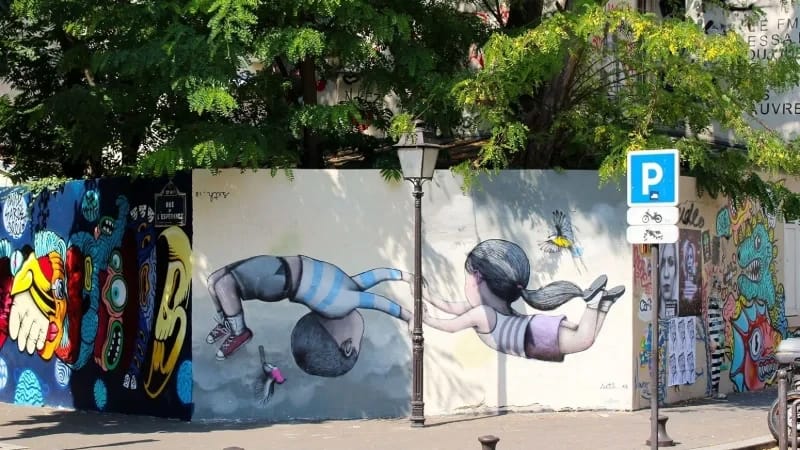
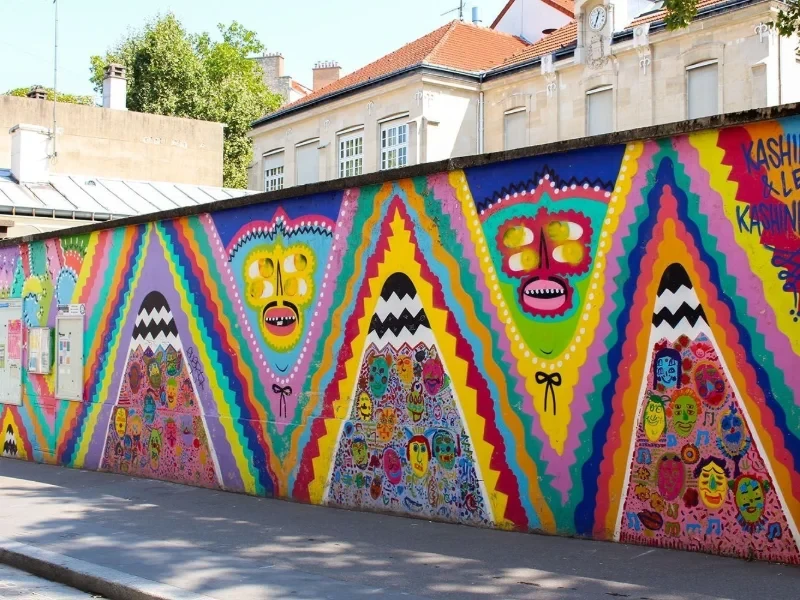
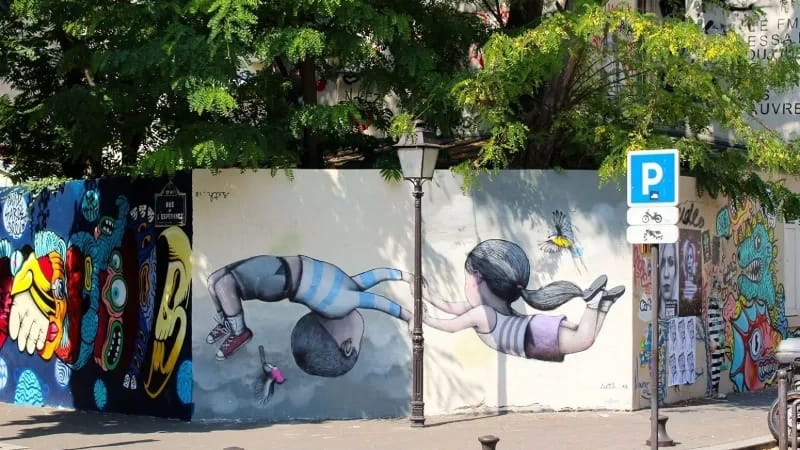
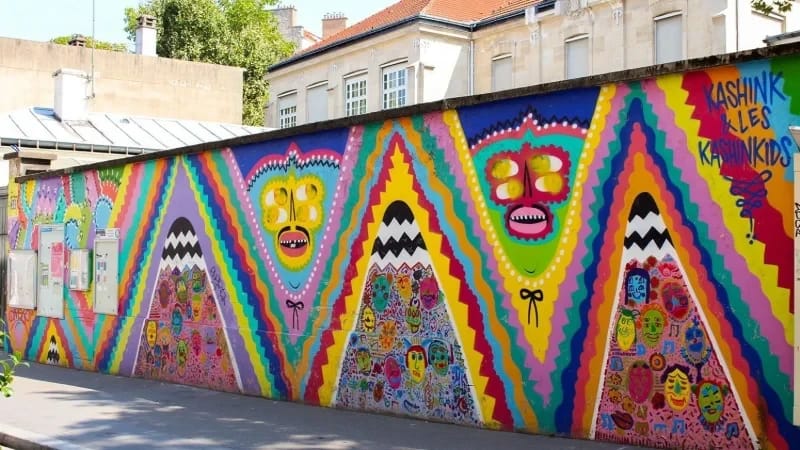
Today, this dynamic continues with a new generation of international artists who regularly come to paint the walls of the neighborhood: Seth Globepainter, C215, Kashink, Combo, PBOY and many others. The Paris City Hall and local associations now openly support this abundant creation through participatory projects and occasional festivals. Each painted wall interacts with the neighboring wall, each new fresco enriches a denser and denser cultural palimpsest. This permanent dialogue between working-class heritage, revolutionary memory, and contemporary creation makes Butte-aux-Cailles an absolutely unique place, where history and art respond to each other in a loop and nourish each other.
Understanding the neighborhood through a historical and artistic guided tour
Discovering Butte-aux-Cailles alone offers a first aesthetic pleasure, but grasping the full depth of the place requires expert guidance. The historical layers that overlap — the vanished Bièvre, the working-class heritage, the Paris Commune, counter-cultures, and contemporary street art — remain largely invisible to the uninitiated walker. A local guide has the keys to connect all these narrative threads and reveal the true depth of the neighborhood. To experience this immersion under the best conditions, the Paris Street Art à la Butte-aux-Cailles, available at the affordable price of 14,50 €, offers a 1.5-hour walking tour starting from Corvisart metro station that skillfully weaves together industrial past and current artistic creation.
The guide shows you exactly where the Bièvre flowed under your feet, tells you about the life of the Gobelins workers, takes you to the places where the Commune's barricades stood, then naturally leads you to the contemporary frescoes and stencils that continue this protest tradition. Each street art piece encountered along the way then takes on a new dimension: it is no longer just a simple wall decoration, it becomes a link in a long memorial chain connecting 17th-century tanners to 21st-century international artists.
This crossed approach radically transforms the perception of the neighborhood. You will never see a painted wall in the same way after this visit, because you will understand that street art does not emerge from nowhere: it is rooted in a specific historical, social, and cultural soil. Butte-aux-Cailles offers one of the clearest examples of this coherence between past and present in the Paris region. A rich and rare cultural experience, ideal for lovers of Paris history, urban art enthusiasts, and all curious people who wish to discover an unexpected side of the capital, far from the beaten tourist paths and clichés.