From Centuries-Old Oaks to the Return of "the Forest"
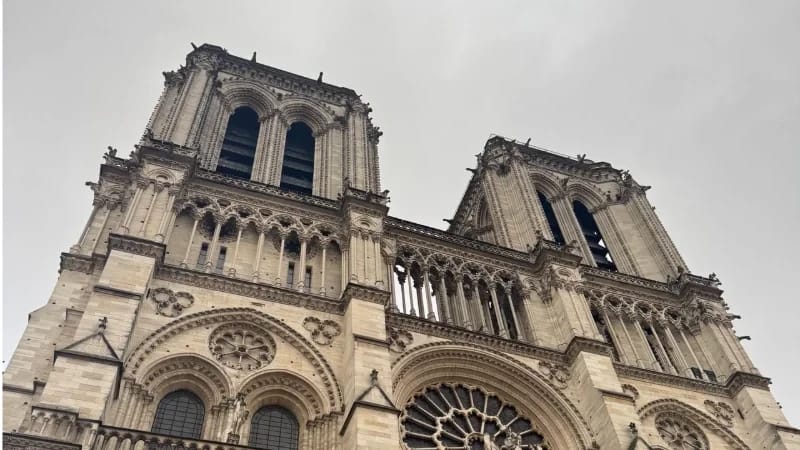
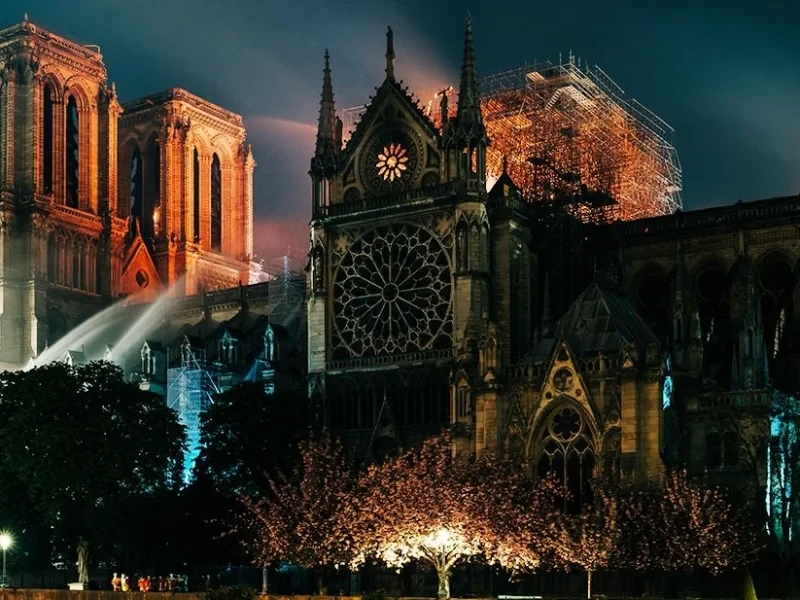
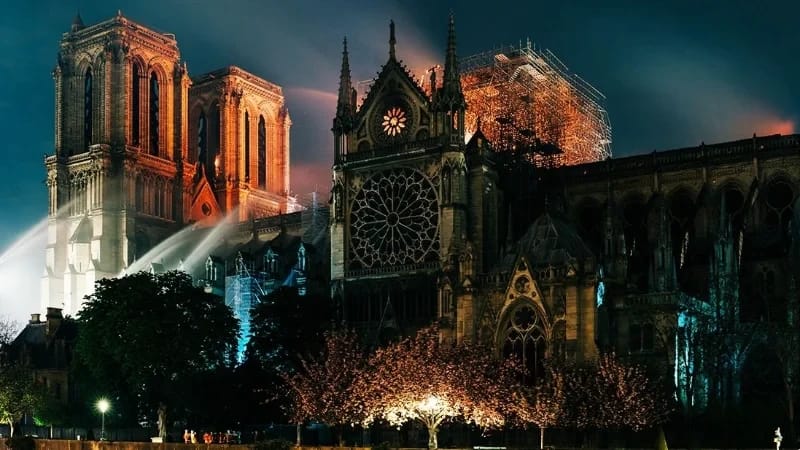
At the heart of the Notre-Dame site is a silent miracle unfolding: the return of “the Forest.” This nickname, given to the cathedral’s framework since the Middle Ages, refers to the vast array of beams supporting the roof since the 13th century. Originally composed of 1,300 oaks felled in royal forests, it had survived eight hundred years of history before going up in flames in April 2019. Rebuilding this interior forest identically, using strictly medieval methods, is the bold challenge undertaken by the site’s carpenters.
The selection of trees required a botanical treasure hunt across France. More than two thousand centuries-old oaks, aged 150 to 200 years, were identified in public and private forests: Bercé, Tronçais, Vibraye, as well as the state forests of Burgundy and Normandy. The criteria were strict: a minimum diameter of 50 centimeters, perfect straightness, and no major knots. Each tree was felled in winter, during the low sap period, then sawn using the radial split technique — the same as that of the builders of Philip Augustus. No nails, no screws: the joints are made with tenons and mortises, pegged with wood. A craftsmanship revived thanks to this unique project that alone has saved an entire French craft industry.
Reconstructing the Framework Using Medieval Techniques
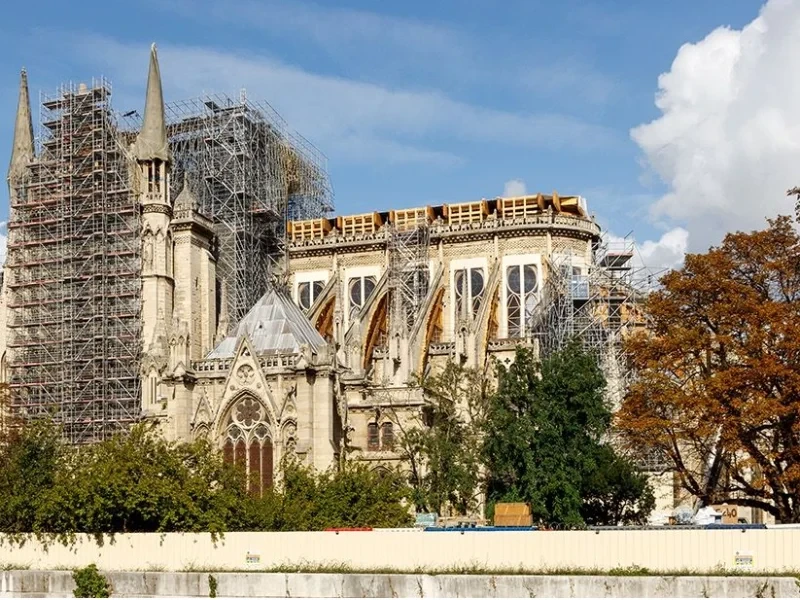
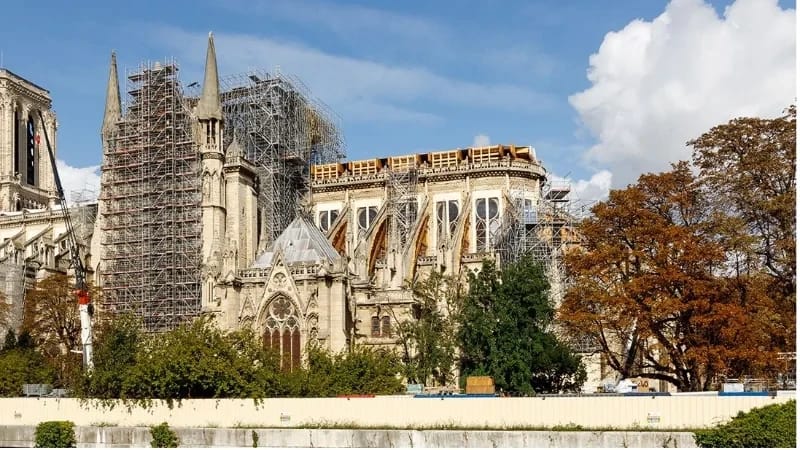
Under the supervision of Ateliers Perrault and the carpentry firm Le Bras Frères, the companions have carved each beam with the adze, this long-handled axe that leaves a characteristic scale-like signature on the wood. A gesture, a posture, a rhythm: the body’s memory awakens to the sound of mallets. Visitors observing the apse from the quays can glimpse the magnitude of this feat through the scaffolding.
Stonecutters and Master Glaziers at the Bedside of Gargoyles and Rosettes
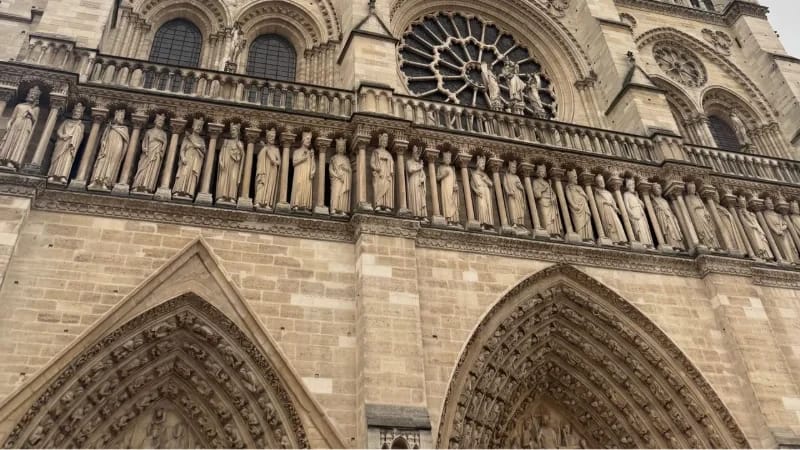
If the framework is the invisible skeleton, the sculptures and stained glass are the skin and eyes of Notre-Dame. On the site, more than two hundred stonecutters work daily to replace burnt blocks, restore cracked gargoyles, and sharpen the Gothic moldings. The stone used comes mainly from the quarries of Oise, selected for its density and color close to the original Lutetian limestone. Each new block is carved on site with a boucharde and a ripe, then artificially aged with a mineral patina to blend in.
The master glaziers have faced an equally dizzying challenge. The large windows — including the north rose, an absolute masterpiece of the 13th century — miraculously survived the fire. However, they were covered with a toxic film of melted lead that fell like a fine rain from the roof. Each panel had to be carefully removed, cleaned with deionized water, restored with new lead bindings, and repositioned with clockwork precision. Some workshops, such as the Sèvres manufacture and the Simon-Marq workshop in Reims, have mobilized their best artisans for years. A Benedictine task that makes every ray of light passing through the nave even more precious. Without these golden hands, Notre-Dame would lose its colorful soul.
The Meticulous Restoration of Sculptures and Stained Glass
The gargoyles, those fantastic creatures that serve to drain rainwater, were systematically molded before intervention. Sculptors work from precise 3D surveys, ensuring absolute fidelity to the original. A method that combines tradition and high technology, as your guide on site confirms.
Experience the Epic of the Builders on a Guided Outdoor Walk
Describing these feats is one thing. Seeing them come to life before your eyes is another. That is precisely the promise of Notre-Dame de Paris : les mystères de sa reconstruction : a ninety-minute immersion around Notre-Dame, led by an official lecturer who personally knows the trades involved in the project. From the Pont au Double, your guide will have you look up at the scaffold planks and explain how the carpenters hoist each beam 40 meters high. From the forecourt, they will show you the new blocks recently sealed, still recognizable by their slightly lighter shade.
You will also discover the forgotten trades that the site has brought back to life: scaffolders specialized in historic monuments, plumber-roofers trained in the old ways, gold leaf gilders who will soon re-gild the spire’s rooster. Each anecdote is based on official publications from the public establishment in charge of conservation and restoration. Nothing is made up, everything is sourced. To enjoy this privileged immersion behind the scenes of French art trades, expect 14,50 € — a modest investment considering the wealth of content delivered live by a field expert.
Decoding the Site from the Bridges and the Forecourt
The route leads from the René Viviani square to the forecourt via the apse and the left bank quays. Each stage offers a different viewpoint on the site. Meet at the Pont au Double, e-ticket on smartphone, comfortable shoes on your feet: you are ready for a memorable dive into living heritage.