Île de la Cité : The Ancient Cradle and Spiritual Heart of Paris
Before Paris, there was Lutetia. And before Lutetia, there was a wild, marshy island inhabited by the Gaulish tribe of the Parisii. We are in the 3rd century BC, and already, this small piece of land in the middle of the Seine occupies an exceptional strategic position: a crossing point of the river, a natural refuge, an impregnable defensive position. When Julius Caesar arrived in 52 BC, he laid the foundations of Gallo-Roman Lutetia, of which Île de la Cité quickly became the administrative and religious center. Modern archaeological excavations have unearthed the foundations of a forum, a temple dedicated to Jupiter, and a civil basilica under the current forecourt. Nothing less.
Over the centuries, the island became denser, Christianized, and hierarchized. By the end of the 6th century, a first cathedral was erected, dedicated to Saint Stephen. Then, under the impulse of Bishop Maurice de Sully, an ambitious project was born in 1163: Notre-Dame de Paris, the most ambitious Gothic cathedral of its time. Around it, a maze of medieval alleys, cloisters, schools, and taverns unfolded. Île de la Cité became the religious, political, and intellectual epicenter of France. The Royal Palace, ancestor of the Conciergerie, made it the seat of power. Nothing was decided in the kingdom without an echo resonating on this pocket handkerchief surrounded by the Seine.
From the Gallo-Roman Market to the Medieval Legends of the Forecourt
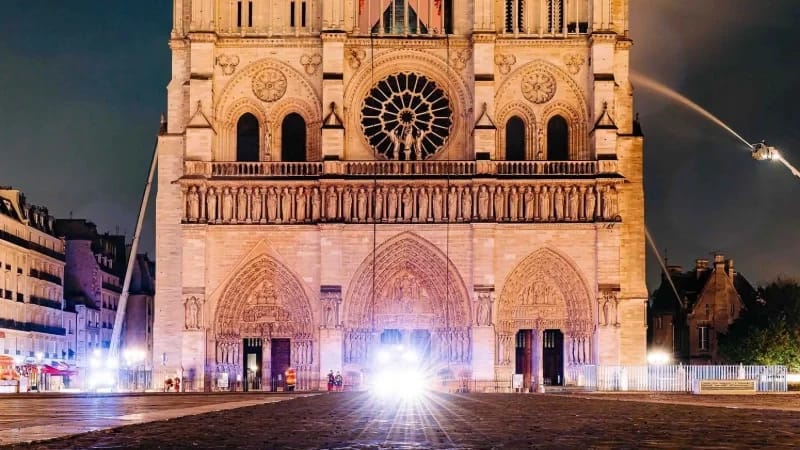
The current forecourt of Notre-Dame is not the one from the Middle Ages. It was considerably enlarged in the 19th century by Haussmann. Under your feet, a few meters deep, the Archaeological Crypt still sleeps - open to the public where you can see ancient and medieval remains. A condensed twenty centuries of Parisian history.
Strategic Places to Observe the Metamorphoses of the Cathedral
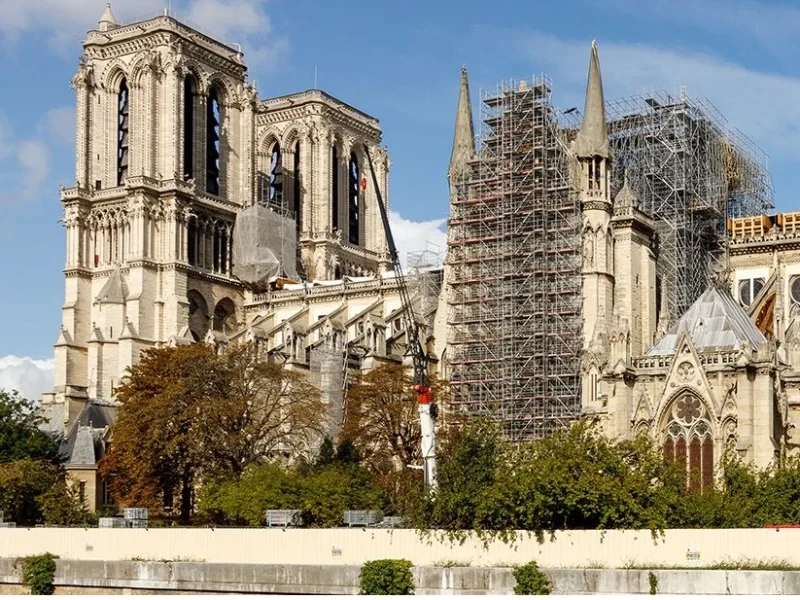
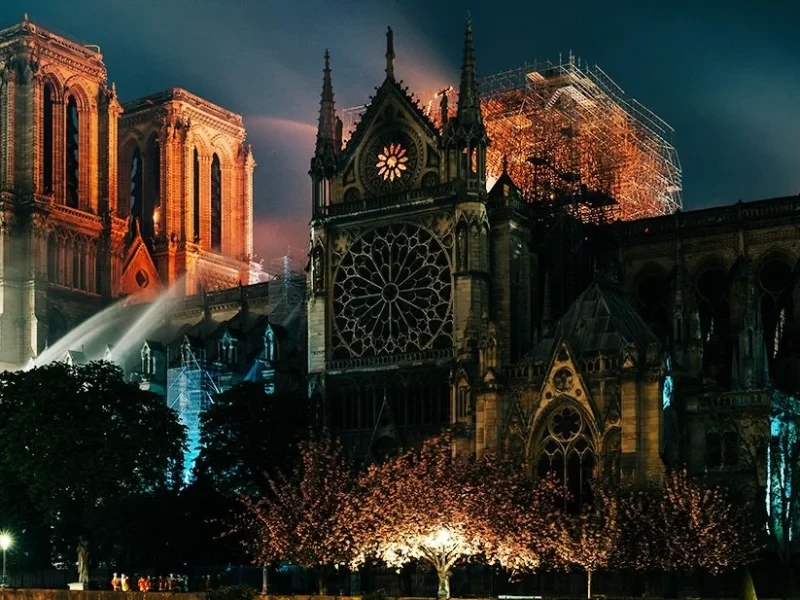
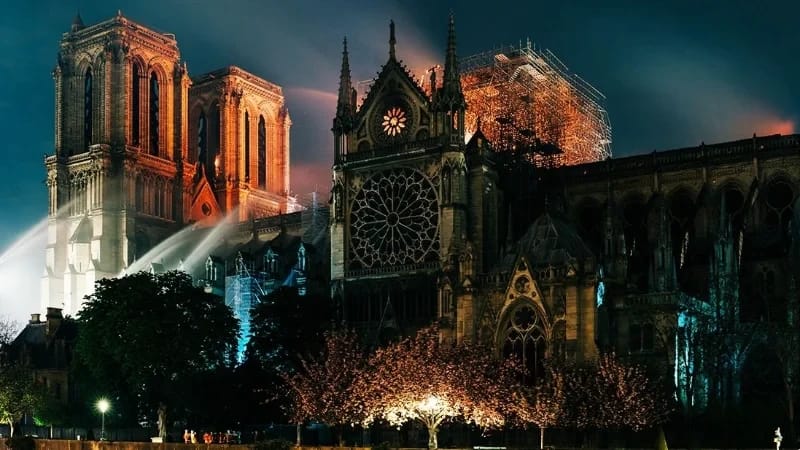
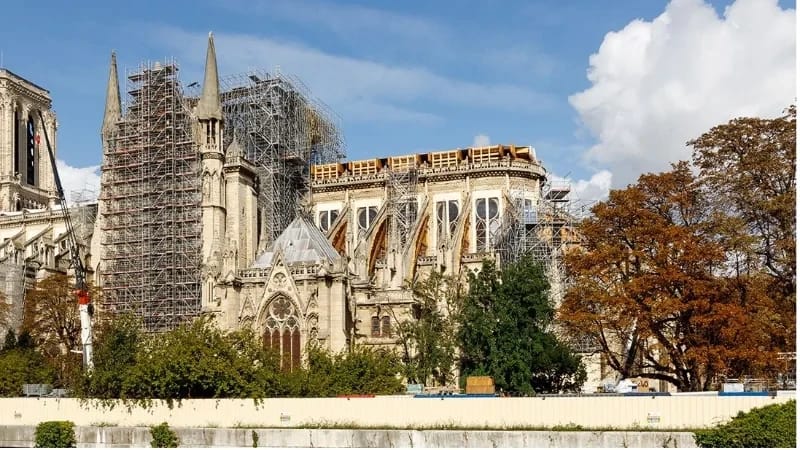
To understand Notre-Dame, you must contemplate it from several angles, at different heights, at various times of the day. Each viewpoint provides information that the others cannot offer. The first essential stop is the Pont au Double, this small pedestrian bridge built in 1626 to allow the passage of the sick to the Hôtel-Dieu. From its deck, the view of the cathedral's chevet is spectacular: the flying buttresses, this forest of stone crutches invented by Gothic master builders, unfold in all their structural power. It is here that you visually grasp why Notre-Dame stands despite the apparent lightness of its vaults.
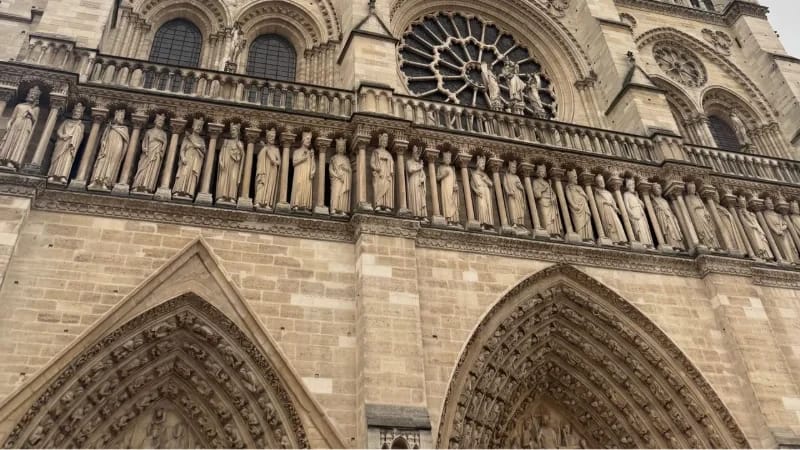
Next head to Square René Viviani, a small discreet garden nestled on the left bank, a stone's throw from Saint-Julien-le-Pauvre. This square houses the oldest tree in Paris - a locust tree planted in 1601 by botanist Jean Robin - and offers a lateral view of the south side of the cathedral. A perspective completely unknown to tourists, often monopolized by the forecourt. Finally, the left bank quays between the Petit Pont and the Pont de l'Archevêché offer exceptional photographic angles, especially in the late afternoon when the grazing light highlights the sculpted reliefs of the facade. Since 2019, these observation points have taken on a new value: they allow you to follow the metamorphoses of the restoration site live, to measure the scale of the scaffolding, to guess through the tarpaulins the new volumes. A rare privilege offered to those who take the time to look.
The Pont au Double and Square René Viviani as Privileged Viewpoints
These two places almost never appear in classic tourist guides. Yet, they are the two best free observation posts on Notre-Dame and its site. A Parisian insider secret that your lecturer shares with you without hesitation during the tour, with all the associated historical anecdotes.
Join the Guided Tour of the Mysteries of the Reconstruction
Reading the stories of Île de la Cité in a book is one thing. Living them by walking through its alleys, stopping in front of concrete remains, listening to the tales of a local expert is quite another. This is precisely the experience offered by Notre-Dame de Paris : les mystères de sa reconstruction : a ninety-minute tour around Notre-Dame, led by an official lecturer who knows every stone, every anecdote, every legend of this extraordinary district. You start from the Pont au Double, meander along the quays, cross Square René Viviani, reach the forecourt and walk around the chevet. At each stage, a revelation, a mental image to take home with you.
The content is not limited to Notre-Dame strictly speaking. Your guide also tells you about the Hôtel-Dieu and its millennial hospital function, Saint-Julien-le-Pauvre church and its links with medieval Sorbonne, the great historical floods of the Seine whose marks are still visible on the quays. A complete panorama of the historical heart of Paris, conveyed with the passion of a local resident, never with the coldness of a textbook. To experience this privileged heritage immersion and leave with unprecedented keys to understanding the oldest district of Paris, count 14,50 €. A modest investment considering the cultural density conveyed live by a top-notch professional.
A 90-Minute Immersion Led by a Passionate Guide Lecturer
Meet at the Pont au Double, e-ticket on your smartphone, comfortable shoes. The tour is accessible to all, including families, strollers welcome. Bring a small bottle of water and a notebook: you will leave with the feeling of finally understanding Paris.